


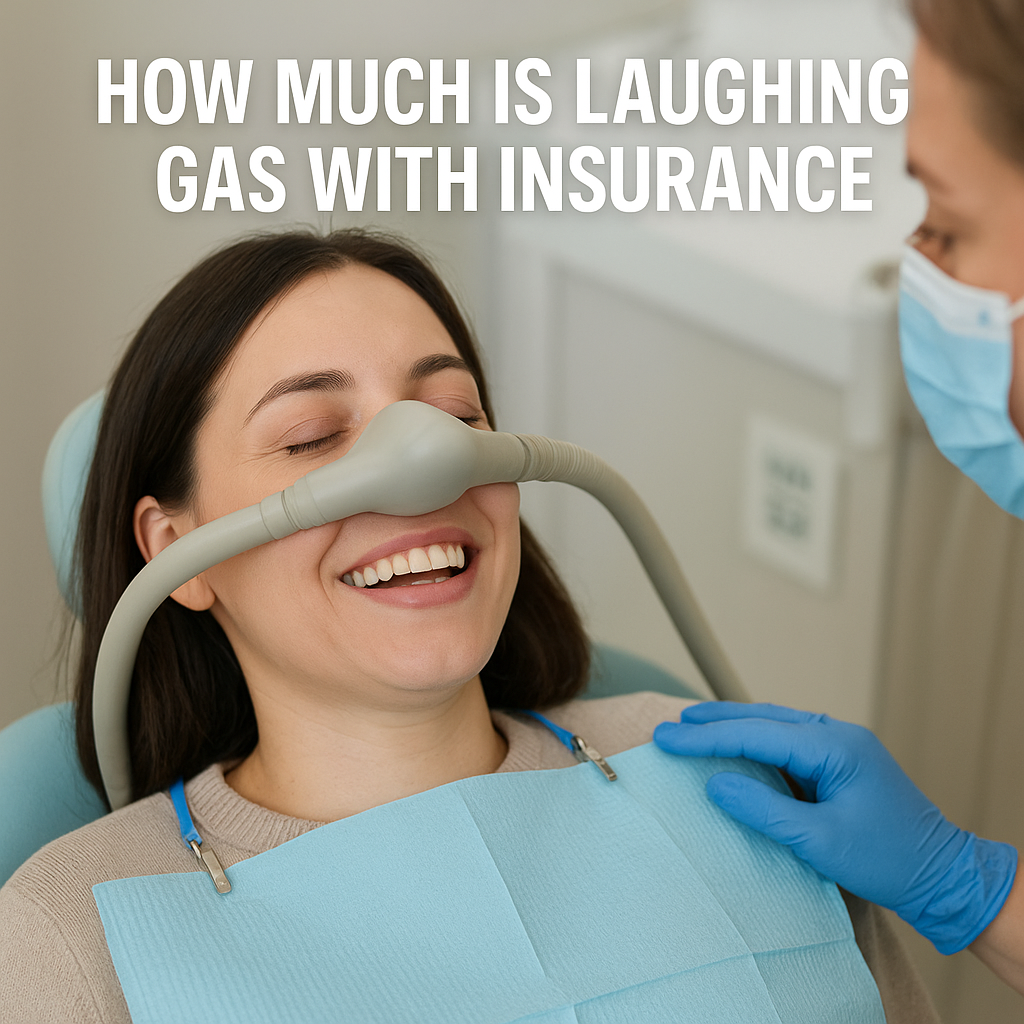
Patients often approach various forms of dental procedures with trepidation or uneasiness of varying degrees. Dentists often use laughing gas, or nitrous oxide, to help patients feel more relaxed. This is a very mild form of sedation which allows a patient undergoing dental surgery to remain calm and serene. And while the patient may feel a bit more relaxed, one may wish to consider the costs involved provided one has dental insurance, of course.
Knowing the cost of laughing gas and the impacted insurance coverage, allows one to budget and prepare accordingly to avert unwanted expenses. Let us analyze what laughing gas is, what it does, the average costs, and how insurance may help out.
What Is Laughing Gas?
The gas is nitrous oxide and is a very mild widely used sedative in dentistry. It is rather straightforward to use it, the patient is required to breathe in gas mixed with oxygen and which is often administered through a very little mask candles and rests over the patients nose. After a very short time, usually no more than a couple of minutes, the patient’s level of relaxation increases and becomes more and more calm. Doctors also notice the patients become a bit dizzy and experience mild euphoria.
The greatest advantage with laughing gas is that patients remain calmed without the need to sleep. You remain conscious and aware for the duration of the procedure, and in this case, the feeling of worry is gone and there is no stress. The effects of the gas come off within minutes after the mask is removed, and this allows you to continue with the normal activities of the day.
Why Dentists Use Laughing Gas?
Dentists use laughing gas for patients that are anxious, as well as those that have sensitive teeth, a gag reflex, and for those that need extensive work to be carried out. It works great with children that are fearful of going to the doctor, as well.
Laughing gas is easy to use, does not involve any other invasive measures, has a the low recovery time with readily available gas sedation, so it is a no-brainer for dentists to put in place the use of this gas to assist with stress management for patients submitting to anxious procedures.
How Much Does Laughing Gas Cost Without Insurance?
Laughing gas is different in cost depending on the dental practice, place, and the procedure that is being carried out. However, according to a study, the most common cost for a visit using laughing gas in the dental practice goes from the low of $150. There are practices that have a set charge for the gas, while others base their fees on time.
For instance:
- A short dental cleaning with laughing gas might cost closer to $50
- A longer procedure like a root canal or extraction may cost closer to $100-$150
When unbundled from insurance, the prices above can shift substantially.
How Much Is Laughing Gas With Insurance?
If dental insurance covers the procedure, laughing gas becomes appreciably cheaper. Even then, the cost will be contingent on the insurance carrier and plan. Some policies include laughing gas as a standard option while others provide it only under limited circumstances.
In many situations, insurance will pay for anywhere from 50-80% of the cost of the laughing gas. For example:
- If your dentist charges $100 for laughing gas and your plan covers 50%50.
- If your plan covers 80% then you only pay $20.
In some instances, one or more insurance carrier will cover the cost of the laughing gas entirely if it is prescribed as medically essential.
Does Dental Insurance Always Cover Laughing Gas
The answer is no. While laughing gas is safe and commonly used, not every dental insurance plan includes it. Some insurance companies see it as an optional add-on rather than a required part of treatment.
If anesthesia is used for minor procedures such as teeth cleaning, insurance coverage is unlikely. But if it is used for extractions, root canals, or oral surgery, coverage is more likely.
However, coverage is more likely if:
- You are undergoing a major dental procedure, such as wisdom tooth removal
- Your dentist documents the medical necessity, such as severe dental anxiety or a gag reflex
- The plan includes a built-in sedation benefit
Factors That Affect Laughing Gas Cost With Insurance
Several factors affect how much you pay, even with insurance.
Type of Procedure
The type of procedure performed is more likely to affect the amount of coverage you will receive.
Insurance Plan Details
Every plan is different. Some cover sedation only for children, others only for oral surgeries. Some plans may require the deductible to be met first.
Dentist Fees
Dentist’s fees vary from one practitioner to another. For instance, the pricing for laughing gas at a practice in a small suburban town might differ from that in a large cosmopolitan center.
Annual Maximum
Most dental insurance plans impose annual limits, which typically range from $2,000. Depending on how much of your dental insurance you have exhausted, you may very well be in a situation where you have to pay a lot out of pocket.
Why Insurance Coverage Helps
Because dental fees can be considerably high, the cost of laughing gas, which is not the most expensive part of dental treatment, adds a little something. We appreciate insurance coverage for the fact that it can save you a lot of money over many visits.
For instance, if you have a dental appointment in a year every three months, then for every appointment where you are charged gas anesthesia at $100 per visit,400. Your insurance can save you $200 for all your visits and if it covers more, then that is even better.
Alternatives To Laughing Gas
There are other options that you can discuss with your dentist if your insurance does not cover laughing gas, or if you wish to forgo the additional expense.
- Oral Sedation: Relaxation therapy technique most often employed prior to the appointment scheduled.
- IV Sedation: Typically used for oral surgery owing to its stronger form of sedation.
- Relaxation Techniques: Shift your mind to Relaxation techniques which include deep breathing, listening to pleasant music, or utilize distraction tools.
- Topical Anesthetics: Smaller procedures are usually performed by the use of topical anesthetics or numbing gels.
The benefits for each technique do not counterbalance the other, and the anticipated expenses can greatly differ.
Tips To Reduce The Overall Expenses for Laughing Gas
- Your provider for the insurance policy should be contacted prior to the appointment to ensure applicability.
- Inform your dentist and ask for an estimate of total expenses with and without the insurance in consideration.
- Use and Flexible Spending Accounts (FSA) or Health Savings Accounts (HSA) if accessible.
- Search and inquiring with dentists may lead to sedation fee discounts offered by specific dental discount plans.
- All procedures are performed with the condition of only a single sedation fee paid for each visit.
Such minute steps should be taken to minimize personal payments and further the aim of less costly dental care.
Conclusion
The use of laughing gas in dental procedures can greatly reduce anxiety and other stress in patients. The average mental cost for a visit is $150 with insurance, broken down to $50 without insurance. The cost of insurance significantly reduces the out-of-pocket payments when the total is broken down.
Although there are some insurance policies that do not cover laughing gas, most plans do if it is deemed necessary or if it is used for more complicated procedures. You may visit with a dentist, check with your plan, and consider different ways to lessen personal costs while remaining comfortable.
To understand broader insurance rules, you may want to learn what is insurance distribution directive, as it explains how insurance products are regulated and sold across markets.
Another important concept to explore is what is rebating in insurance, which highlights practices that can impact policyholder benefits and insurer compliance.
FAQs About Laughing Gas With Insurance
How is laughing gas used?
Used to alleviate anxiety, laughing gas makes dental treatments easier and more pleasant for patients while allowing for more effective, prompt treatment.
Is laughing gas safe for kids?
Yes, laughing gas is safe for kids. Most dental professionals will give laughing gas to children who are anxious or have difficulty remaining still during a dental procedure.
Is it safe to drive after laughing gas?
Yes, it is. Driving is permitted after laughing gas for most patients, as the gas itself dissipates and is safe after the mask is removed.
Is laughing gas covered by dental insurance?
Not usually. Most insurance plans do not cover the laughing gas used for more complicated treatments, such as dental extractions or root canals.
How do I know if my insurance will cover laughing gas?
The quickest way is to directly call your insurance company or have your dentist check on the benefits before the scheduled visit.
